
Healthy Diet for Hair Health- Where MENI Fits In
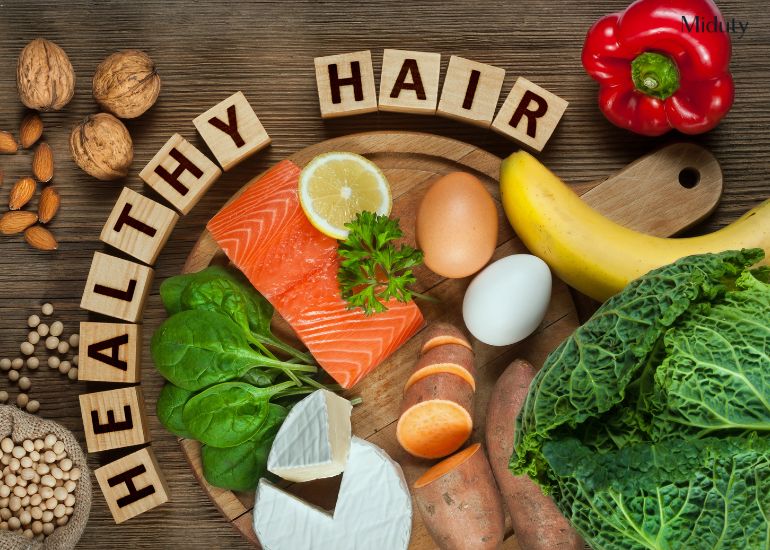
Hair follicles are among the most metabolically active tissues in the body, which makes them unusually sensitive to what's missing from your plate. Here's what the research says about the nutrients that actually matter for hair, and where they come from.
Protein:
The Literal Building Block
Hair
is structurally built from keratin, a protein — which is why protein-calorie
malnutrition is a well-documented cause of hair thinning and shedding [1]. Get
it from: eggs, fish, legumes, and dairy, spread across meals rather than
one large serving.
Iron
and Zinc: The Most Evidence-Backed Minerals
A
systematic review of micronutrients and pattern hair loss found that iron and
zinc, alongside vitamin B and vitamin D, appear to play a critical role in hair
growth and maintenance, with deficiencies linked to increased hair loss risk [2].
Correcting a genuine deficiency in either has been associated with improved
hair growth in clinical literature, though both need medical monitoring since
excess supplementation carries its own toxicity risk [1]. Get it from:
iron — lentils, spinach, red meat (paired with vitamin C for absorption); zinc
— pumpkin seeds, chickpeas, nuts.
Vitamin
D: More Than a Bone Vitamin
Research
on hair loss conditions has repeatedly found lower vitamin D levels in people
experiencing non-scarring hair loss, including telogen effluvium and female
pattern hair loss, compared to those without hair loss [3]. Get it from:
fatty fish, fortified foods, and sensible sun exposure.
Biotin
and Vitamin C: Supporting Roles
Biotin
(a B-vitamin) supports keratin production, while vitamin C is essential for collagen
synthesis and helps the body absorb iron from plant sources — which is why the
two are frequently paired in hair-focused nutrition research [1]. Get it
from: citrus, bell peppers, and eggs.
Omega-3s:
Promising, But Not a Standalone Fix
A
recent scoping review found omega fatty acids may support follicle biology in
preclinical studies, and some clinical trials combining them with other
nutrients reported improved density — but the review was clear that current
evidence does not support omega-3 supplementation alone as a standalone hair
loss treatment [4]. It's best treated as one part of an overall
nutrient-complete diet, not a magic bullet on its own. Get it from:
salmon, walnuts, and chia seeds.
Where
MENI Fits In
Getting
all of the above from food every single day isn't realistic for most people —
which is exactly the gap MENI's daily capsules are built to cover. The Holistic
Hair Care Combo's capsules combine Biotin, Marine Collagen, and Vitamin C,
giving the scalp a consistent nutritional baseline that complements (not
replaces) an already protein- and micronutrient-rich diet.
No
single "hair food" works in isolation — hair growth reflects your
overall nutrient intake over months, not days. A protein-rich diet with
adequate iron, zinc, vitamin D, and antioxidants gives your follicles what the
research says they actually need.
References
- Guo
EL, Katta R. Diet and Hair Loss: Effects of Nutrient Deficiency and
Supplement Use. Dermatol Pract Concept. 2017. (Open Access) — PMC: PMC5315033
- Micronutrients
and Androgenetic Alopecia: A Systematic Review. PubMed: 39440586
- The
Role of Vitamin D in Non-Scarring Alopecia. Int J Mol Sci. (Open
Access) — PMC: PMC5751255