
Who Needs Hair Transplant Treatment ?
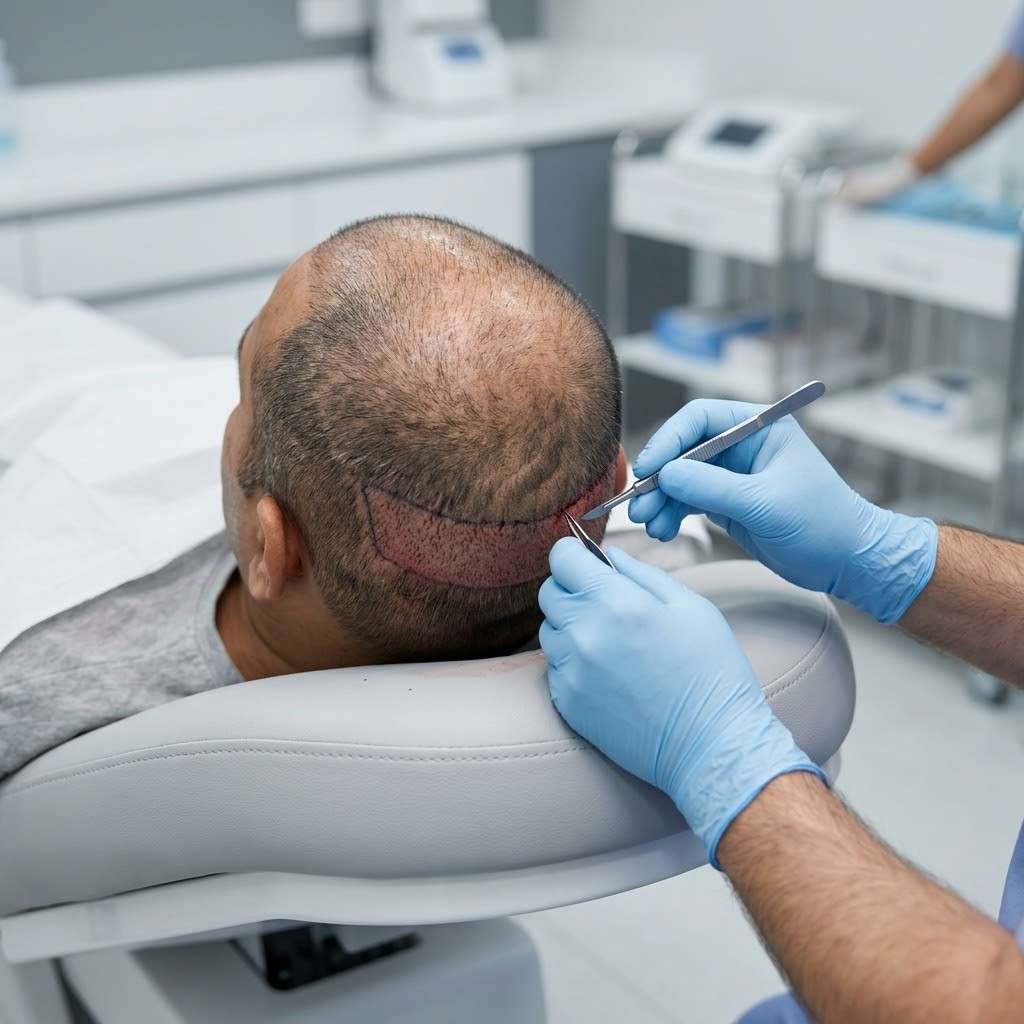
A hair transplant relocates androgen-resistant follicles from a donor area (usually the back of the scalp) to thinning areas, and remains the standard surgical treatment for androgenetic alopecia [1]. It's a significant, permanent procedure — not a first-line option for everyone with thinning hair. Here's what clinical guidance says about candidacy.
Who's
Generally a Good Candidate
- Stable,
well-defined pattern loss:
Ideal candidates have a stable, clearly defined loss pattern, a healthy
scalp, and good donor-area density [1]. Norwood Stage III–V (men) is
typically the sweet spot.
- Good
donor density:
Since grafts come entirely from the patient's own donor zone, adequate
density there is one of the most critical factors in candidacy and outcome
quality [1].
- Age
roughly 25–40:
Loss patterns generally need time to stabilize before a surgeon can plan a
hairline that ages naturally; very young patients risk continued loss
around a transplant.
- Realistic
expectations:
Outcomes depend on understanding that transplantation redistributes
existing hair — it doesn't create new follicles [2]
Who
Usually Isn't (Yet)
- Early-stage
loss (Norwood I–II):
Cosmetic benefit rarely justifies the cost and permanence; medical/topical
therapy is typically recommended first.
- Unstable
or rapidly progressing loss:
Operating before a pattern stabilizes risks isolated transplanted patches
surrounded by future balding.
- Diffuse
thinning with limited donor supply: More common in some women, where the donor zone
itself may also be thinning.
- Active
scarring or autoimmune alopecia’s: These need dermatological treatment for the
underlying condition first, not grafting.
Where
a Daily Routine Like MENI Fits In
For
those in the "not yet" category, a routine addressing scalp health
and follicle nutrition — like MENI's Holistic or Advance Combos — is a
reasonable starting point before surgery. For those who've had or are planning
a transplant, keeping surrounding native hair healthy supports the overall
result, though it doesn't affect the grafts. It's a companion to, never a
substitute for, a surgeon's assessment.
References
- Goldin
J, Zito PM, Raggio BS. Hair Transplantation. StatPearls. (Open
Access) — NCBI Bookshelf: NBK547740